

If you’ve ever come across the word misogyny online and wondered what it really means, you’re not alone.
Many people see it in comments, arguments, or headlines and feel unsure about its definition.
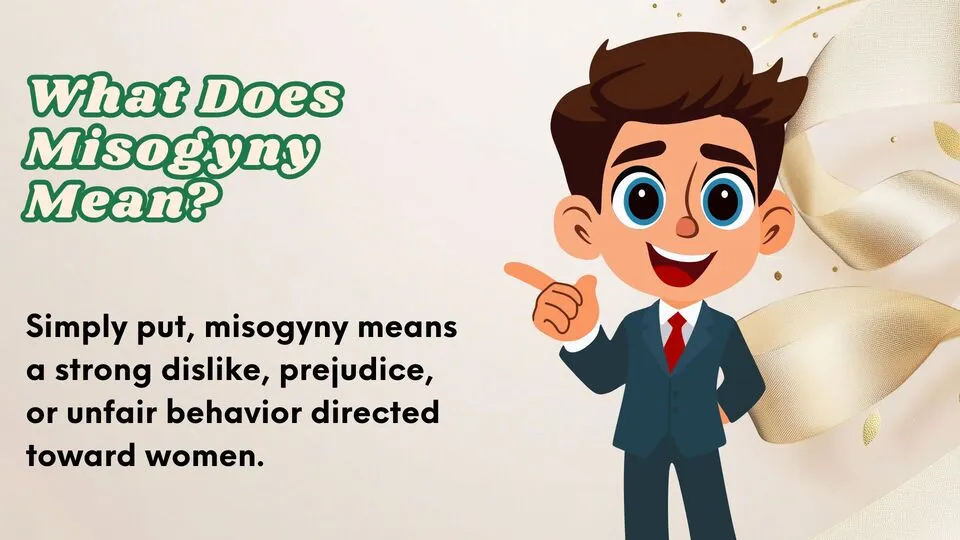
Simply put, misogyny means a strong dislike, prejudice, or unfair behavior directed toward women.
It’s a serious term, often used to describe harmful attitudes or actions that treat women with disrespect.
In this guide, we’ll break down what misogyny means in clear, easy-to-understand language so you feel confident the next time you see it.
Consider this your friendly, judgment-free explanation — made just for you.
🧠 What Does misogyny Mean in Text?
Misogyny isn’t an acronym, slang word, or playful phrase.
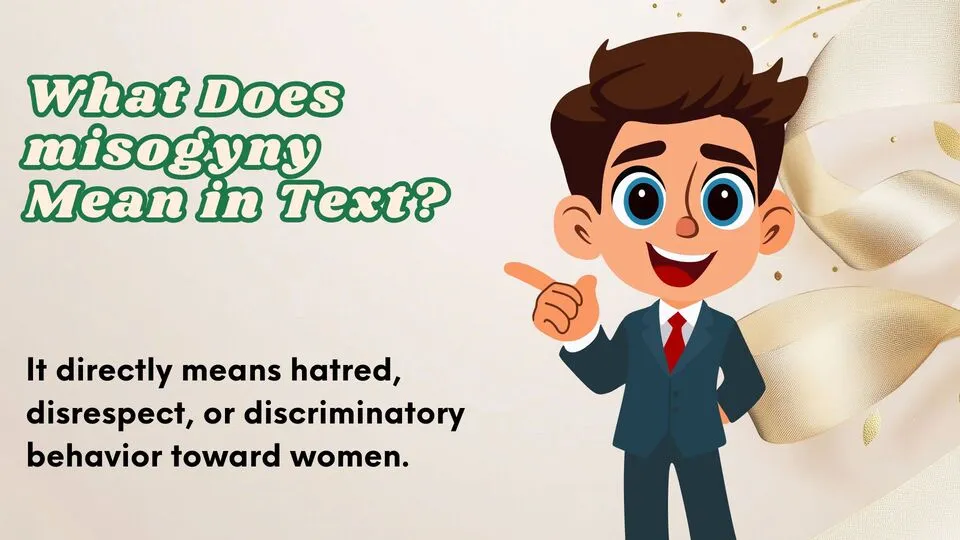
It directly means hatred, disrespect, or discriminatory behavior toward women.
In texting or social media, people use it to call out comments, actions, or patterns that show negativity or bias against women.
Example sentence:
“His comment about women being ‘too emotional to lead’ is literally misogyny.”
In short: misogyny = prejudice against women = harmful or disrespectful attitudes/behavior toward women.
📱 Where Is misogyny Commonly Used?
You’ll frequently see misogyny used on:
- Twitter/X 🐦
- TikTok 🎵
- Instagram comments 💬
- Reddit threads 🔥
- YouTube discussions ▶️
- News articles and opinion posts 📰
- Texting when discussing behavior or topics related to gender
Tone:
- ❌ Not casual
- ❌ Not flirty
- ✔️ Serious
- ✔️ Used in discussions about gender issues, equality, or disrespectful behavior
- ✔️ Common in debates, think pieces, and awareness conversations
It is not a slang word you casually drop with friends — it carries emotional and social weight.
💬 Examples of misogyny in Conversation

Here are realistic texting-style examples showing how people use the word online or in chats:
1.
A: idk that joke didn’t sit right with me
B: yeah it felt kinda misogyny tbh
2.
A: why’s he always talking down to women like that??
B: classic misogyny 🙄
3.
A: she got ignored in the meeting again
B: ugh more subtle misogyny
4.
A: that influencer’s comments were wild today
B: fr… straight up misogyny
5.
A: can’t believe ppl still say “women don’t belong in sports”
B: the misogyny is out of control
6.
A: she called him out and dudes got sooo mad
B: misogyny jumpscare 😂 (but fr)
7.
A: is it misogyny if he only criticizes women creators??
B: yeah if it’s a pattern, it def can be
🕓 When to Use and When Not to Use misogyny
✅ When to Use “misogyny”
Use this word when you want to describe:
- Disrespectful behavior toward women
- Biased comments based on gender
- Patterns of treating women unfairly
- Calling something harmful or discriminatory
- Discussing equality or social issues
- Explaining toxic attitudes
❌ When Not to Use “misogyny”
Avoid using it:
- In light, casual conversation
- To describe harmless disagreements
- In professional emails (unless context requires it)
- As a joke — it’s a serious term
- Without understanding the context
Comparison Table
| Context | Example Phrase | Why It Works |
| Friend Chat | “that joke felt lowkey misogyny 😒” | Casual setting, open discussion about behavior |
| Work Chat | “the comment sounded inappropriate toward women.” | More professional, avoids emotional language |
| “the statement may reflect gender-based bias.” | Clear, formal, and respectful |
🔄 Similar Words or Alternatives
| Term | Meaning | When to Use |
| Sexism | Unfair treatment based on gender | General or formal discussions |
| Patriarchy | A system where men hold primary power | Social, political, or academic contexts |
| Misandry | Prejudice against men | When referencing bias toward men |
| Discrimination | Unfair treatment of any group | Workplace or formal settings |
| Bias | Prejudice for or against someone | Neutral or professional tone |
| Toxic masculinity | Harmful expectations placed on men | Cultural or social behavior discussions |
❓ FAQs About “misogyny”
1. Is misogyny slang?
No. It’s a formal dictionary word, not a text abbreviation or casual phrase.
2. Does misogyny always mean hatred?
Not always literal hatred — it can also mean prejudice, disrespect, stereotypes, or unfair behavior toward women.
3. Can women be misogynistic?
Yes. Anyone can hold beliefs shaped by social conditioning.
4. Is calling someone misogynistic an insult?
It’s a serious accusation. It’s better to focus on describing the behavior rather than labeling the person.
5. Is misogyny the same as sexism?
Sexism is broader; misogyny is specifically about attitudes toward women.
🔚 Conclusion
Misogyny is a powerful word with an important meaning.
It’s not slang or a playful texting term — it’s used to describe harmful behaviors, stereotypes, or patterns that affect women.
Understanding the term helps people communicate more clearly, recognize unfair treatment, and call out attitudes that promote inequality.
Whether you see it in comments, conversations, or headlines, knowing what misogyny means gives you the clarity to respond thoughtfully.
And now you can confidently identify how and when to use the term in everyday online discussions.